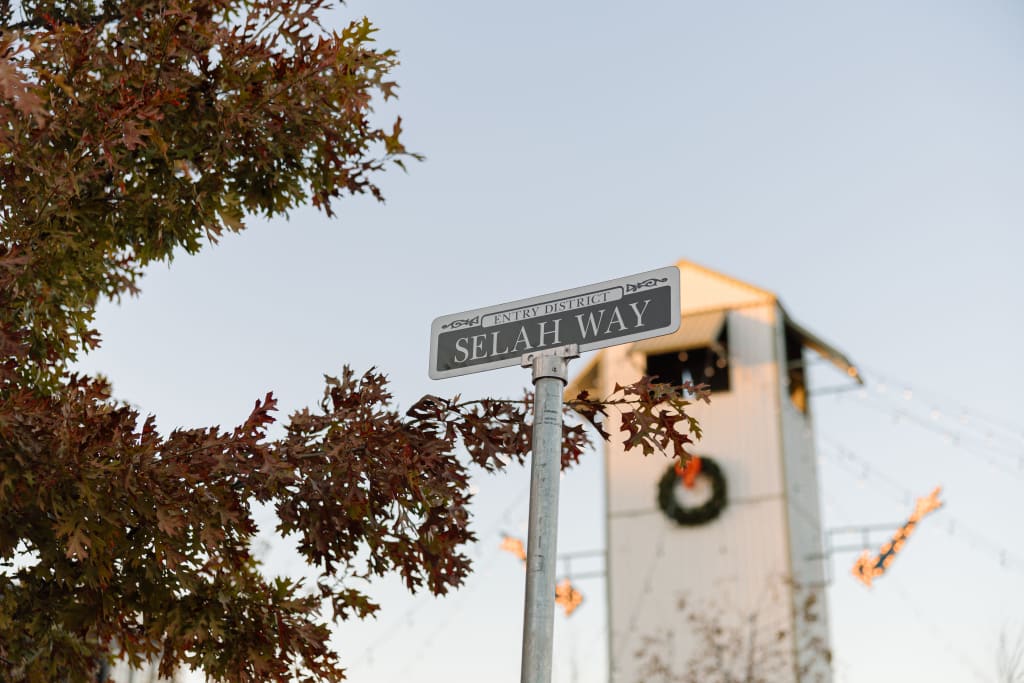
Selah: Designed to Belong | Volume VI - The Human Scale: Designing Places That Feel Right

If you’ve ever tried to walk somewhere nearby and found yourself blocked by a fence, a cul-de-sac, or a road that simply doesn’t go where you need it to, you’ve experienced something planners call disconnectivity.
It’s more common than most people realize. Two places might sit just a few hundred feet apart, but getting from one to the other can require a long drive around winding streets or busy arterial roads.
What should feel close suddenly feels far away. That’s the quiet influence of street networks.
Most people don’t think about how streets connect. But the way they’re arranged plays a powerful role in shaping how a neighborhood feels and functions. When streets connect well, neighborhoods feel open, navigable, and alive.
When they don’t, places can begin to feel isolated—even when they’re technically close to everything.
For many decades, suburban development often followed a familiar pattern. Large arterial roads carried most of the traffic, while neighborhoods branched off into smaller roads, loops, and cul-de-sacs. The goal was often simple: reduce through-traffic in residential areas.
And in some ways, that worked. But it also produced an unintended side effect. Many neighborhoods became self-contained islands. A short walk to a nearby park might require navigating a long indirect route. Visiting a friend in the next subdivision might require getting in a car. The streets may feel quiet, but they’re also disconnected.
Over time, this pattern can limit movement, reduce walkability, and make daily life more dependent on driving.
The problem isn’t the idea of calm streets.
The problem is when the overall network stops connecting people to the places around them.
Connectivity is one of those ideas people feel immediately, even if they’ve never heard the word used in planning.
In a well-connected neighborhood:
streets offer multiple routes to get somewhere
blocks are short enough that walking feels manageable
paths and sidewalks link parks, homes, and nearby destinations
you don’t feel trapped by a single entrance or exit
walking somewhere nearby actually feels logical
Instead of one long route, you have options. That flexibility changes how people move. Walkers and cyclists benefit. Drivers benefit too. Traffic distributes itself naturally across smaller streets rather than concentrating on a few large roads.
And the neighborhood begins to feel less like a maze and more like a network.
New Urbanism strongly emphasizes connected street networks because connectivity supports many of the things communities value. Walkability improves when routes are direct. Local businesses become more accessible. Parks and public spaces feel closer. Neighbors cross paths more often. Instead of forcing everyone onto a handful of large roads, a connected street network spreads movement across smaller, human-scale streets.
That design choice has several benefits:
shorter travel distances
more walkable routes
better traffic distribution
increased safety through visibility and activity
Connectivity doesn’t mean chaos.
It means choice.
And choice makes a neighborhood easier to navigate and easier to enjoy.
At Selah, connection isn’t just about infrastructure. It’s about how people experience their neighborhood. When streets and paths connect thoughtfully, they open up possibilities. Children can safely reach parks. Neighbors can walk to nearby gathering spaces. Daily errands become opportunities for interaction.
And the neighborhood begins to feel less closed off and more integrated with the life around it. Connectivity reflects Selah’s belief that communities should feel open and welcoming—not isolated behind barriers.
Because places that connect well tend to support stronger relationships and more vibrant daily life.
Historically, villages developed with interconnected streets and paths. They grew organically, responding to how people moved through the landscape. Paths linked homes to markets. Small streets connected public squares to surrounding neighborhoods. Multiple routes allowed daily life to flow naturally. This network of connections helped keep villages active and accessible. When modern neighborhoods rediscover that pattern, they begin to feel less like isolated subdivisions and more like communities woven together.
The village works not because every street is busy—but because every street belongs to a larger, connected whole.
Think about the area around your home.
Are there multiple ways to walk or drive to nearby places?
Do streets connect naturally to surrounding neighborhoods?
Can you reach parks, shops, or gathering spaces without long detours?
Does the street layout encourage exploration—or discourage it?
Does your neighborhood feel open to the community around it?
Sometimes the difference between a connected place and a disconnected one comes down to a handful of design decisions made long before anyone moved in.
Next in the series, we’ll explore a simple architectural feature that has shaped neighborhood life for generations: the front porch.
It may seem like a small detail, but the way homes meet the street can quietly influence whether neighbors remain strangers or become friends.
Because the spaces between private life and public life often shape community more than we realize.
Streets do more than move cars. They connect people.
They link homes to parks, neighbors to neighbors, and communities to the wider world around them.
When streets form a thoughtful network, movement becomes easier and everyday life becomes richer.
At Selah, connectivity is part of designing neighborhoods that feel open, welcoming, and alive.
Because when paths connect…
people do too.
Sign in with your email address
You’re being redirected to the page with listing data.