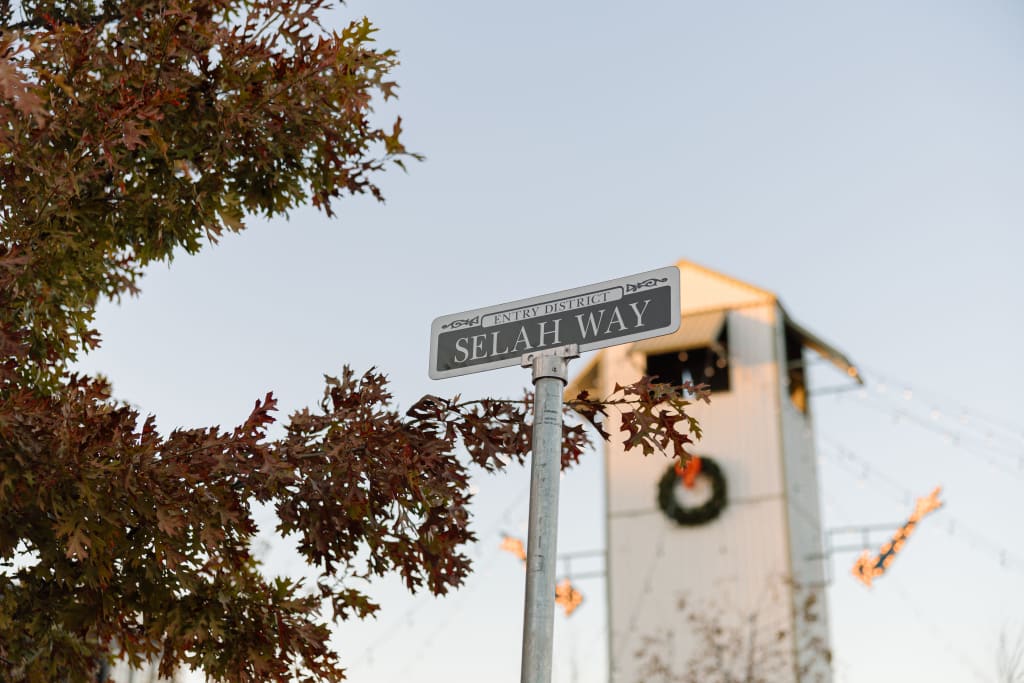
Selah: Designed to Belong | Volume VIII - The Front Porch Principle: Where Neighbors Become Neighbors

There’s something you notice when you walk through a neighborhood that people truly care about.
It’s not always dramatic.
Maybe the flowers along a sidewalk are freshly watered.
A bench is clean and well-used.
Someone has taken the time to sweep their front porch or trim a small tree near the street.
None of these things are extraordinary on their own.
But together, they signal something deeper.
They show that people feel responsible for the place they live.
That feeling—stewardship—is one of the quiet forces that helps communities thrive over time.
Because good design can create the conditions for a strong neighborhood, but the long-term health of a place depends on something more personal: the people who care for it.
Thoughtful planning can do a lot.
It can create walkable streets, welcoming public spaces, and neighborhoods where people cross paths naturally.
But even the best design can only go so far.
A beautiful park can become neglected if no one feels responsible for it.
Shared spaces can lose their vitality if people stop using them.
Neighborhoods that once felt lively can slowly drift toward anonymity if residents begin to see the place as temporary rather than meaningful.
The truth is that thriving communities depend on more than layout and architecture.
They depend on participation.
Places flourish when the people who live there feel invested in what happens around them.
Stewardship isn’t about grand gestures or organized programs.
Most of the time, it looks like ordinary care.
It might show up as:
neighbors planting flowers along a shared path
residents organizing small clean-up efforts
people greeting visitors and helping newcomers feel welcome
families choosing to spend time in neighborhood parks
residents supporting nearby businesses and gathering spaces
These actions are simple, but they add up.
They create a sense that the neighborhood belongs to the people who live there—not just to developers, city planners, or property lines.
And when people feel ownership of a place, they naturally begin to protect and nurture it.
New Urbanism recognizes that the long-term success of a neighborhood depends on the relationship between people and place.
Design can encourage that relationship by creating environments where residents feel connected to their surroundings.
Walkable streets encourage people to spend time outside.
Public spaces provide places where neighbors interact.
Front porches and human-scale streets make daily life visible.
When people experience their neighborhood regularly—not just from behind a windshield—they begin to feel a stronger sense of belonging.
And belonging often leads to stewardship.
When people feel connected to a place, they are far more likely to take care of it.
At Selah, building communities isn’t only about creating places that look beautiful on opening day.
It’s about creating places people will continue to care for years from now.
Stewardship reflects Selah’s values of belonging, well-being, and long-term vitality.
When residents feel connected to their neighborhood, they begin to see shared spaces as extensions of their own homes.
The park down the street matters.
The street corner matters.
The trees, paths, and gathering spaces matter.
And when people begin to care for these places collectively, something powerful happens.
The community becomes resilient.
It begins to sustain itself.
Historically, villages thrived because residents felt responsible for the life of the community.
Public spaces weren’t anonymous.
They were shared.
The square belonged to everyone.
The paths were maintained by the people who walked them.
Neighbors naturally kept watch over the spaces they used every day.
That shared responsibility strengthened the village over time.
When neighborhoods today encourage the same sense of participation, they begin to rediscover that resilience.
A village works not only because of its design—but because the people within it care for it.
Think about the place you live.
Do residents feel connected to the shared spaces around them?
Are parks and gathering areas regularly used and cared for?
Do neighbors take pride in how their street looks and feels?
Do people invest their time and energy in the life of the neighborhood?
Does the community feel temporary, or does it feel rooted?
These questions often reveal how strong a neighborhood’s sense of stewardship really is.
Next in the series, we’ll explore another important ingredient in thriving communities: local businesses and neighborhood economies.
Because when small shops, cafés, and local services become part of everyday life, they do more than provide convenience.
They help anchor the social life of a neighborhood.
Great neighborhoods are not only designed.
They’re cared for.
They grow stronger when residents feel connected to the spaces around them and take pride in the places they share.
At Selah, stewardship is part of what makes a community last.
Because when people care for a place together…
that place begins to care for them in return.
Sign in with your email address
You’re being redirected to the page with listing data.