I didn’t always think walkability mattered.
Honestly, I used to file it under “nice idea.” Something you see in charming older towns or on vacation. But then you spend enough time in places where walking is possible — and then go back to places where it isn’t — and you feel the difference in your body.
You don’t just notice it. You live it. Because walkability isn’t really about sidewalks. It’s about whether daily life is built to be reachable… or always out of reach.
Let’s be real. Driving is convenient—until it becomes mandatory.
And in a lot of modern neighborhoods, it is mandatory. Want coffee? Drive. Need milk? Drive. Kids want to see a friend? Drive. Quick evening walk that feels safe? Maybe… if there’s a place to go and a way to get there.
Here’s what’s easy to miss: when driving becomes the default for everything, we lose the everyday moments that make a place feel alive.
We don’t just lose steps. We lose interactions. We lose independence. We lose time. And over time, we stop living in our neighborhoods and start commuting through them.
That’s the critical point: walkability isn’t a lifestyle preference — it’s a quality-of-life multiplier.
Walkability can sound like planning jargon until you picture the day-to-day version:
You can take a five-minute walk after dinner and actually enjoy it—not dodge traffic.
Your kid can ride a bike to a park without you feeling like you need a rescue plan.
You run into someone you know and the conversation happens naturally.
You don’t have to “make a trip” out of everything.
You feel like you’re part of your neighborhood instead of just parked inside it.
Walkability gives you something modern life quietly steals: ease. Not “everything is perfect” ease—more like “life isn’t such a heavy lift” ease. And that’s where New Urbanism gets very practical.
One of the most overlooked truths about walkability is this:
Walking changes how you relate to a place.
When you move at human speed, you notice things. You recognize faces. You feel safer because you’re more familiar with your surroundings. The neighborhood stops being background noise and starts feeling like yours.
New Urbanism emphasizes walkability because it unlocks other good things:
Shorter distances: Useful places are closer, not scattered miles apart.
Comfortable streets: Streets are designed to be crossed, not feared.
Human-scale design: Buildings and spaces feel welcoming instead of overwhelming.
Connected routes: Sidewalks and paths actually lead somewhere—without dead ends.
Everyday destinations: Parks, small shops, gathering spots—reasons to be out.
It’s not about forcing people to walk. It’s about building places where walking makes sense. Because when walking makes sense, people show up—outside, in community, in the life of the neighborhood.
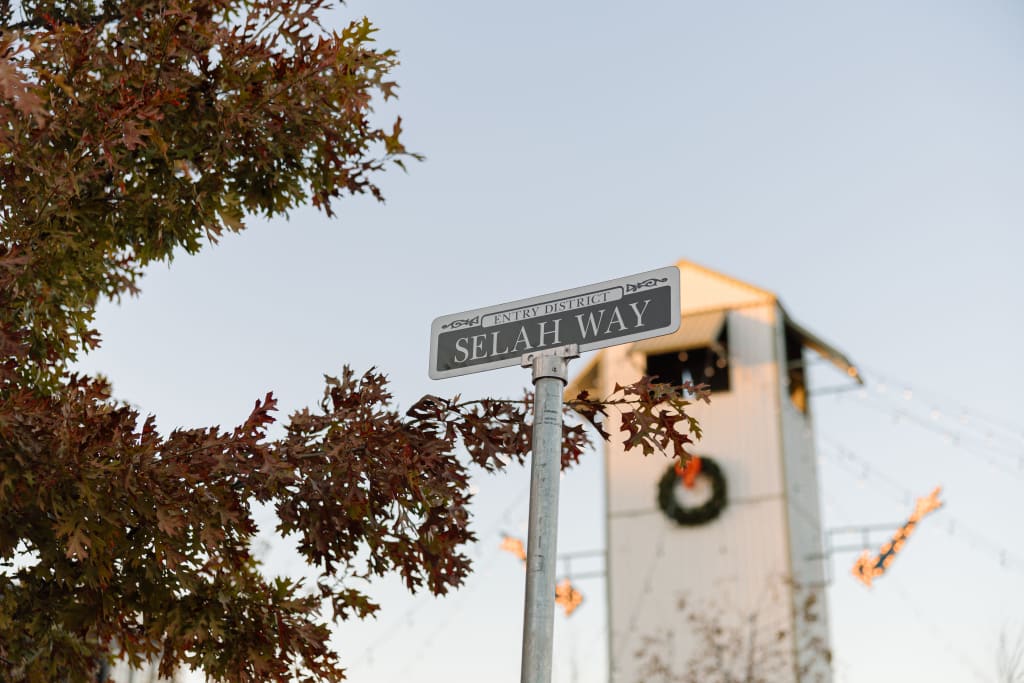
At Selah, walkability isn’t a buzzword. It’s a belief: people deserve neighborhoods that meet them where they are.
Walkability supports Selah’s values in very real ways:
Belonging: You can’t feel connected to a place you never experience.
Well-being: Movement becomes part of life, not another task on the list.
Stewardship: People care for what they can access and enjoy regularly.
Long-term vitality: Walkable places tend to support local business and lasting neighborhood identity.
Walkability is one of the simplest ways to make a place feel more human. And “human” isn’t a style. It’s a standard.
If the village is the goal, walkability is the wiring.
A village works when:
Daily needs aren’t far away.
Streets aren’t barriers.
Kids can safely move through their world.
Older neighbors can remain independent longer.
You can choose to be out in the neighborhood without planning an entire operation.
Without walkability, community depends on calendars, car keys, and coordination. With walkability, community can happen on a random Tuesday. That’s not small. That’s life-changing.
Be honest—this isn’t a “you” question, it’s a design question:
Can you get somewhere useful on foot within 10 minutes?
Do you have a route that feels safe and pleasant—not just technically possible?
Could a child or an older adult navigate your neighborhood without fear?
Do streets invite walking, or discourage it?
Are there places you’d want to walk to… or is everything separated by distance?
If most of those answers are “no,” you’re not doing life wrong. Your environment is just asking too much of you.
Next in the series, we’ll get into something that walkability depends on more than people realize: public spaces that actually work—parks, greens, plazas, and “third places” that don’t feel like afterthoughts.
Because sidewalks alone don’t build community.
They simply make it possible to reach the places where community can form.
Walkability is a quiet kind of freedom. It’s the freedom to move through your day without everything requiring a vehicle, a schedule, and a plan.
And when a place is built for people at human speed, something surprising happens:
Life feels closer.
Neighbors feel nearer.
And home starts to feel like more than an address.
Sign in with your email address
You’re being redirected to the page with listing data.