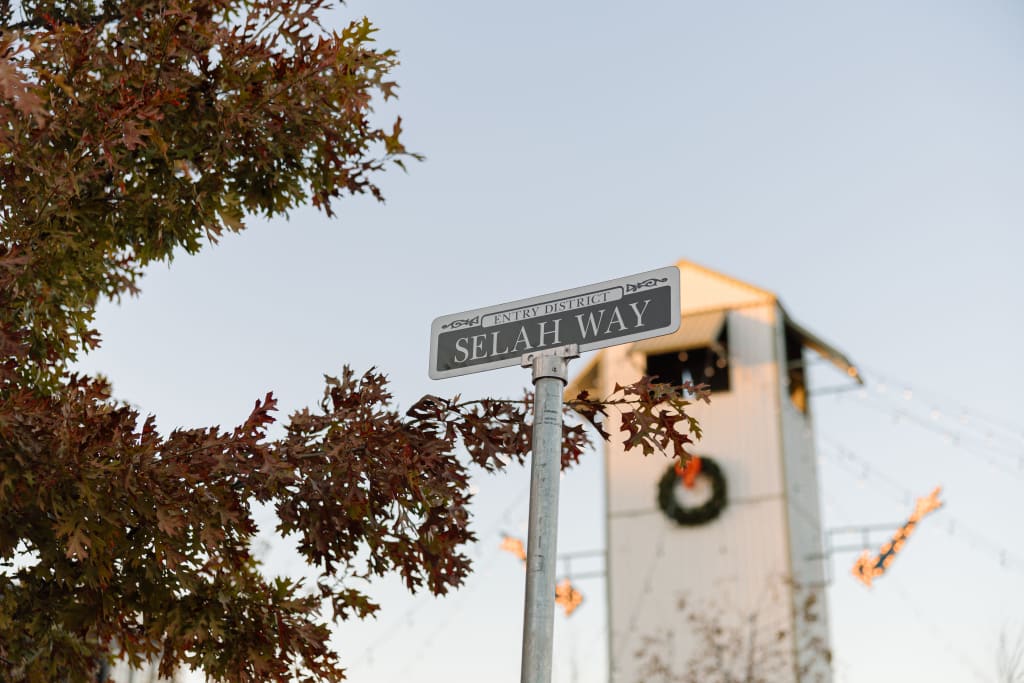
Selah: Designed to Belong | Volume III - Third Places: Where Community Has Room to Happen

Have you ever visited a place and immediately felt like it had a personality?
Not just buildings. Not just streets. Something deeper.
You notice it in the materials people use, the way homes face the street, the small details in storefronts, the kinds of businesses that show up, and even the pace of daily life. Some places feel unmistakably themselves. Others… could be anywhere.
That difference isn’t just aesthetic. It’s emotional. And it matters more than people often realize. Because when a place has character, people start to feel connected to it. They begin to recognize it as their place — not just a location on a map. And that’s where identity becomes one of the quiet foundations of community.
If you’ve traveled around the country much, you’ve probably felt this.
You exit the highway and see the same sequence of buildings you saw in the last town.
The same chain stores.
The same building styles.
The same layouts.
Everything works. Everything functions. But nothing feels rooted. And over time, that sameness has an effect.
When places lose their identity, it becomes harder for people to feel attached to them. Neighborhoods become interchangeable. They feel temporary, almost like they could be packed up and moved somewhere else. That’s the quiet problem with generic development. It may be efficient, but it rarely inspires belonging. And belonging is what turns a neighborhood into a community.
Local character isn’t about copying the past or freezing a place in time.
It’s about recognizing the story of a place and letting that story show up in how it grows.
A neighborhood with real character often feels like this:
the architecture reflects the region rather than a national template
public spaces feel tied to the local environment
small businesses bring personality to the street
materials, colors, and scale feel appropriate to the area
there are details you only see here, not everywhere
You can feel when a place belongs to its surroundings. It feels grounded. Familiar. Authentic. And when people feel that authenticity, they’re more likely to care for the place and invest in its future.
Because identity creates pride.
One of the often overlooked principles of New Urbanism is respect for local context. Good neighborhoods don’t erase the character of a place — they build on it.
That means paying attention to things like:
regional architecture and building traditions
the natural landscape and climate
street patterns that reflect how the area developed
local materials and craftsmanship
spaces that reflect how people in that region actually live
New Urbanism doesn’t aim to produce identical neighborhoods everywhere. In fact, it aims for the opposite. It encourages places that feel distinctive and rooted in their environment. Because when design responds to local culture and landscape, neighborhoods gain something powerful: identity.
And identity makes a place memorable.
At Selah, we believe communities should feel connected not only to each other, but to the place they exist within. That means paying attention to more than layout and infrastructure.
It means asking deeper questions:
What makes this place unique?
What story does this land already hold?
How can design reinforce that story instead of ignoring it?
What will make people feel proud to say they live here?
Selah’s commitment to stewardship and belonging naturally points toward this idea of rootedness. Because a place with identity invites care. People protect what feels meaningful to them.
And identity is often the thing that gives meaning to a place.
Villages throughout history rarely looked identical to one another. Each one reflected its region, climate, materials, culture, and traditions. That’s part of what made them feel alive.
The buildings told a story. The streets revealed a pattern of life. The public spaces reflected how people gathered. The structure of the village supported community, but the character of the village made it memorable. And that combination matters.
A neighborhood can function well — walkable streets, good parks, welcoming public spaces — but if it lacks identity, it can still feel incomplete.
Structure supports community.
Character deepens it.
Think about the place you live now.
Does it feel distinct, or could it exist anywhere?
Are there visual or cultural details that reflect the local region?
Do public spaces feel connected to the surrounding landscape?
Do local businesses add personality to the area?
Would someone visiting remember your neighborhood for something unique?
These aren’t just design questions. They’re questions about attachment.
Because the places people remember are usually the places that feel rooted.
Next in the series, we’ll explore something that quietly shapes how a neighborhood functions every day: the mix of uses that bring life to a place.
Homes, shops, parks, workplaces, and gathering spots all play different roles.
But when they’re thoughtfully combined, something powerful happens.
A neighborhood stops being a place you simply return to at night…
…and becomes a place where life happens throughout the day.
People don’t just belong to communities.
They belong to places.
Places with stories.
Places with personality.
Places that feel unmistakably themselves.
At Selah, that idea matters.
Because when a neighborhood feels rooted — when it reflects the land, the culture, and the people who live there — something deeper takes hold.
Not just convenience.
Not just function.
But identity.
And identity is what turns a place from somewhere you live…
into somewhere you truly belong.
Sign in with your email address
You’re being redirected to the page with listing data.